AI and RAN: How will RAN startups of the future differ from Gen-Z and even Gen-Alpha Startups?
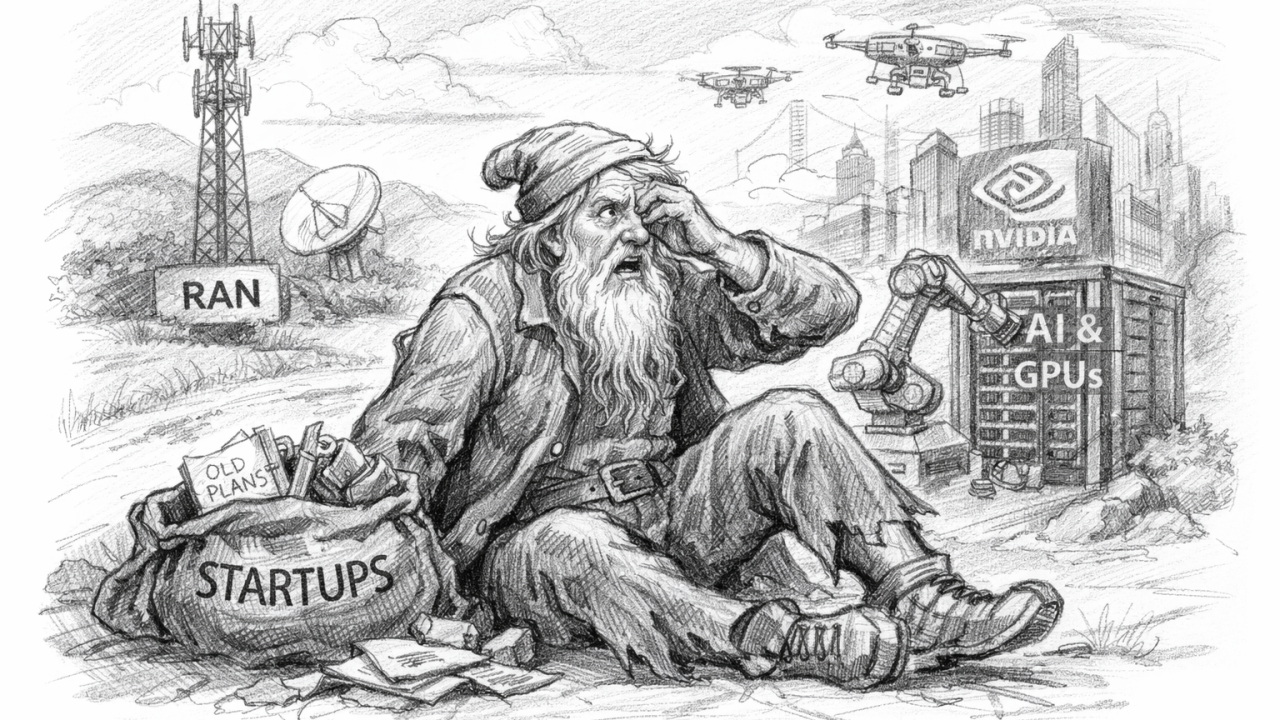
Gen Z spans 1997–2012, and Gen Alpha spans 2012-2024. So we are casting a very wide net. Think Altiostar, or Parallel Wireless, or JMA Wireless, or Mavenir . You get the drift.
We are familiar with the typical telecom startup pathway to commercialization glory - Disaggregation lowering barriers. Software overpowering hardware. Open interfaces creating opportunity. New entrants out-innovating incumbents weighed down by legacy.
That’s so pre-AI ‘and’ RAN! Things are going to be different from now.
Am I getting too ahead of myself? What has changed so drastically?
What has changed is the arrival of AI and RAN. To recap, the AI and RAN working group in the AI-RAN Alliance “aims to explore the concurrent use of converged computer-and-communications infrastructure to run RAN and Gen AI workloads”
An epochal development like this is bound to affect the startup evolution one way or the other. If not today, then tomorrow for sure. What’s the harm in a bit of crystal-gazing anyway?
To understand how deeply things can change, let us look backward before looking forward.
Looking back
In the good old days, startup value creation followed a fairly consistent playbook from the bouquet of largely intuitive options. Say, disaggregating the stack to attack vendor lock-in by separating hardware from software and decoupling layers; or, specializing deeply in physical and baseband layers to improve their performance and or costing; or, offering openness at the interface level to break open the walled gardens.
In general, the buzzword for startup value creation was creating options – for telcos, OEMs and other stakeholders. If you mastered 3GPP, virtualization, the physical layer and cloud primitives, you were competitive.
Optimization, once done, was largely cast in stone. There was precious little retraining and relearning.
Take Altiostar, for example. It aimed at positioning itself as alternative to integrated OEMs. What path did it follow? It made its entry through software-defined RAN while leveraging virtualization and open interfaces. Essentially Altiostar bet that software agility would outperform hardware-centric incumbents.
Altiostar banked on the traction generated by off-the-shelf compute philosophy and platform agnosticism. Importantly, the company operated in an environment where product roadmap was steered by vendor lacuna and operator requirements.
Looking ahead
Let’s take out our crystal ball now.
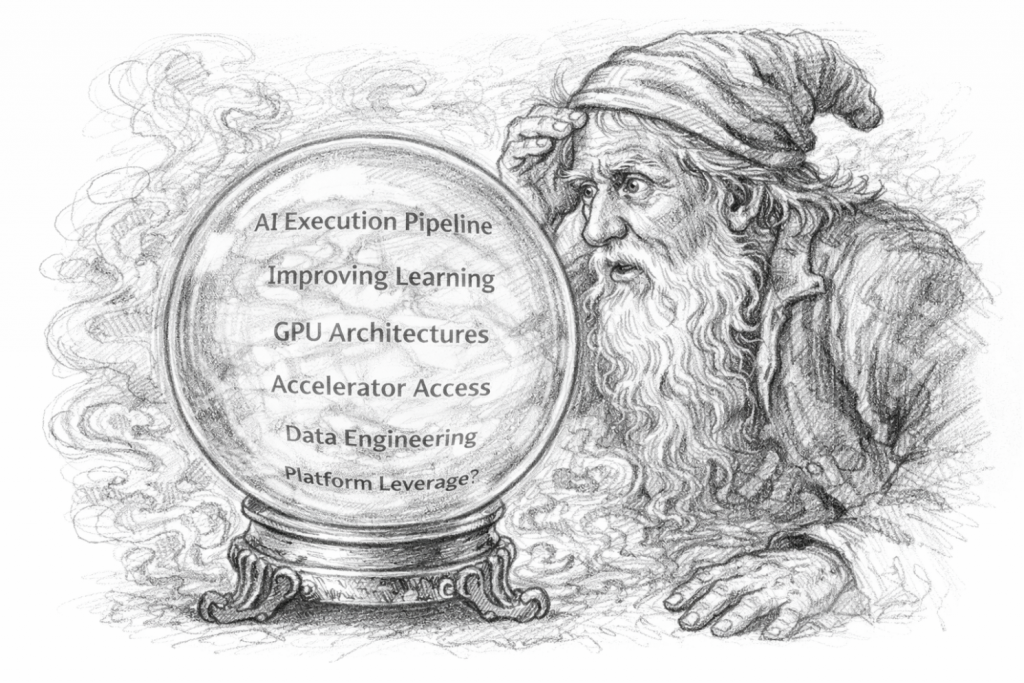
What does the future hold for RAN startups?
Enter the AI-RAN Alliance, with its "AI and RAN" construct. In this world, base stations and network nodes are analogous to distributed compute outposts for GPUs from the likes of NVIDIA . The architectural substrate shifts from off-the-shelf compute to standardized AI framework of GPUs and accelerators.
What happens now? Here are a few possibilities.
Fundamentally the center of gravity may shift from protocol-centric design to compute-centric orchestration. There are some obvious corollaries of this shift - the platform roadmap will gain ascendancy and access to accelerators and toolchains may become strategic competitive advantage.
RAN may then start resembling one of the many AI domains with some specific workload patterns.
Let’s go back to Altiostar and transpose its journey to the present day. In addition to, or instead of focusing on a full virtualized baseband and a near-complete RAN stack, it would have the a lot to ponder:
1. Where do we sit in the AI execution pipeline?
2. What signal do we generate that improves learning?
4. How do we coexist with GPU-centric architectures?
5. What about accelerator access?
6. What are our data engineering and continuous optimization strategies?
7. What leverage do we have with the platform owners, data holders and compute gatekeepers?
And most importantly, Can some of us have the audacity to dream of replacing the RAN vendor,
or
should we recalibrate this dream to a more modest objective - becoming indispensable to someone else’s RAN intelligence?
What do you think? Is AI-RAN an ambition impeder, or ambition enabler, or ambition modifier?
Published on: January 18, 2026
|

RELATED BLOGS
AI burden in RAN – 5G Wins!

Is Open RAN Finally Crossing the Urban Massive MIMO Barrier?